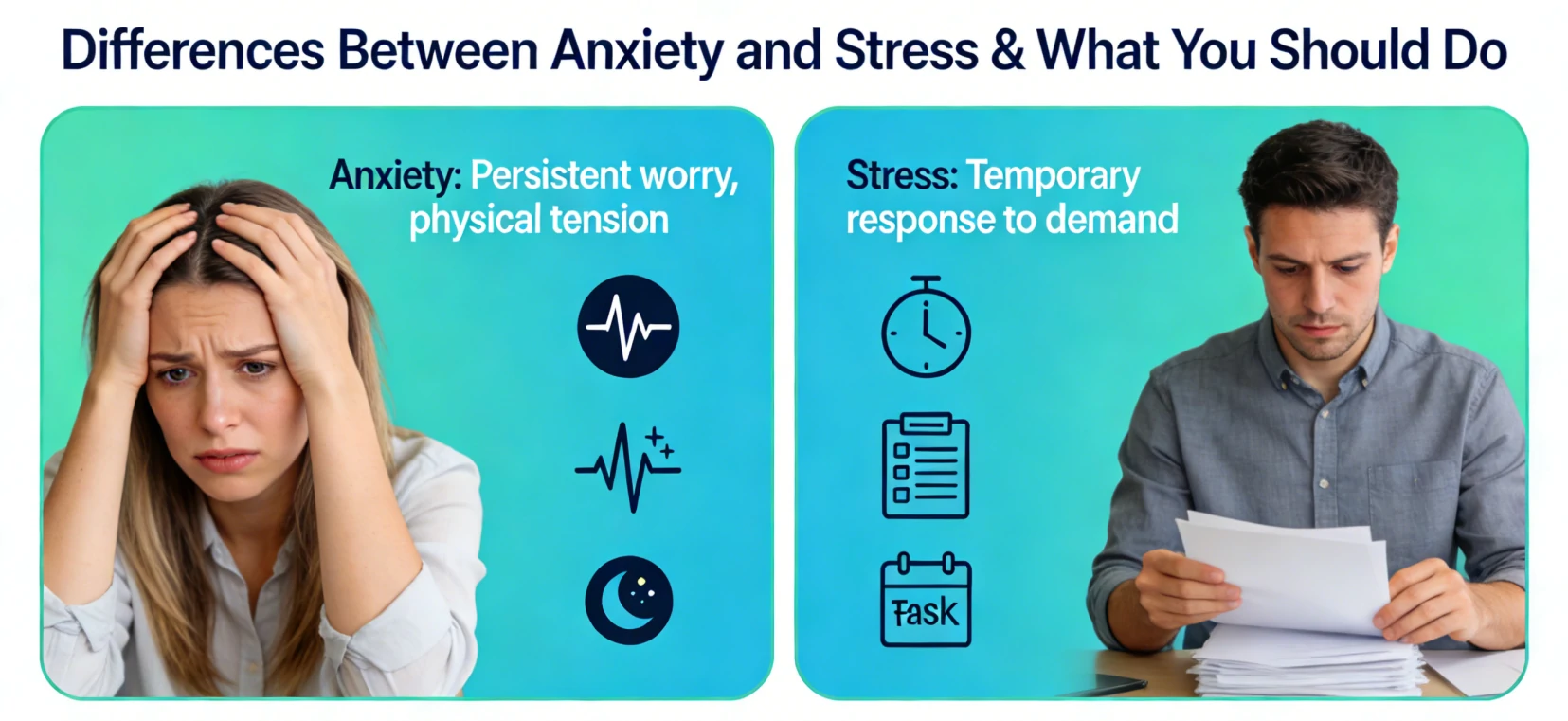



In the quiet hum of a city morning, as sunlight filters through half-drawn blinds, Sarah sips her coffee and feels it—the familiar tightening in her chest, the racing thoughts about deadlines, the dread of an email she hasn’t yet opened. For millions like Sarah, anxiety isn’t just an occasional visitor; it’s a constant companion. Yet, in the evolving landscape of mental health, one approach has consistently offered a lifeline: Cognitive Behavioral Therapy, or CBT. It’s not a magic cure, but as research and lived experiences suggest, it might just be one of the most effective tools we have.
Anxiety, in its essence, is the body’s ancient alarm system—a survival mechanism that, when functioning properly, keeps us alert to danger. But for many, this system misfires, turning everyday situations into perceived threats. According to the World Health Organization, anxiety disorders affect over 260 million people globally, making them one of the most common mental health conditions worldwide. Yet, despite its prevalence, anxiety remains widely misunderstood. It’s not merely “overthinking” or a lack of resilience; it’s a complex interplay of biology, environment, and cognition.
Take, for instance, the way anxiety can hijack the senses. A sudden noise might trigger a cascade of physical reactions: a pounding heart, sweaty palms, shallow breaths. These aren’t just in your head—they’re physiological responses rooted in the amygdala, the brain’s fear center. As Dr. Elena Torres, a clinical psychologist specializing in anxiety disorders, explains, “Anxiety often manifests in ways that feel entirely beyond our control. The mind and body become locked in a feedback loop, each intensifying the other.”
But what if we could learn to interrupt that loop? This is where CBT enters the picture.
Cognitive Behavioral Therapy, developed in the 1960s by psychiatrist Aaron Beck, operates on a deceptively simple premise: our thoughts, feelings, and behaviors are interconnected. Change the way you think, and you can change the way you feel and act. Unlike some forms of therapy that delve extensively into the past, CBT is pragmatic and present-focused. It’s about equipping individuals with skills to manage their mental health in real-time.
Consider the cognitive aspect first. CBT identifies “cognitive distortions”—those irrational, often automatic thoughts that fuel anxiety. For example, catastrophizing (expecting the worst), black-and-white thinking (seeing no middle ground), or overgeneralization (viewing a single negative event as a never-ending pattern). A person with social anxiety might think, “If I stumble over my words during the presentation, everyone will think I’m incompetent.” CBT teaches them to challenge that thought: Is there evidence? What’s the likelihood? What’s the worst that could happen—and could I handle it?
Then comes the behavioral component. Avoidance is a common coping mechanism for anxiety, but it only reinforces fear over time. CBT encourages gradual exposure to anxiety-provoking situations, helping individuals build tolerance and confidence. A person afraid of elevators might start by standing near one, then pressing the button, then riding one floor. Each small success rewires the brain’s fear response.
The efficacy of CBT isn’t just anecdotal; it’s one of the most rigorously studied forms of psychotherapy. A meta-analysis published in JAMA Psychiatry in 2022 found that CBT produced significant reductions in anxiety symptoms across diverse populations, with effects often lasting long after therapy ended. Another study from the University of Oxford highlighted how CBT can alter brain activity in regions associated with emotional regulation, suggesting tangible neurological changes.
Yet, it’s important to note that CBT isn’t a one-size-fits-all solution. Some studies, such as those cited by the American Psychological Association, indicate that while CBT is highly effective for many, its success can depend on factors like the therapist-client relationship, the individual’s readiness for change, and the specific type of anxiety disorder. For instance, CBT has shown remarkable results in treating generalized anxiety disorder and panic disorder, but its application for conditions like PTSD might require adaptations, such as Trauma-Focused CBT.
So, what does CBT look like in practice? Imagine a typical session. The therapist and client collaborate as a team, identifying specific problems and setting achievable goals. Techniques might include:
One of CBT’s strengths is its emphasis on homework. Clients practice these skills between sessions, integrating them into daily life. For Sarah, this meant starting a journal where she documented her anxiety triggers. Over time, she noticed patterns: her anxiety spiked when she felt unprepared or criticized. With her therapist’s guidance, she developed coping statements like, “I’ve handled challenges before, and I can handle this one.”
Behind the techniques and terminology are real people reclaiming their lives. Take Mark, a 42-year-old teacher whose panic attacks began after a car accident. For months, he avoided highways, rearranging his life around his fear. Through CBT, he learned to recognize the physical sensations of panic—racing heart, dizziness—not as signals of impending doom, but as harmless, temporary reactions. Slowly, he reintroduced driving into his routine, celebrating each small victory. “It wasn’t about eliminating anxiety entirely,” he reflects. “It was about learning to live alongside it without letting it steer my life.”
Then there’s Lila, a college student grappling with perfectionism and social anxiety. CBT helped her reframe failure not as a catastrophe, but as a part of growth. She recalls her therapist’s words: “What if you gave yourself permission to be imperfect? What if you allowed room to learn?” These questions became mantras, gradually loosening the grip of her anxiety.
Despite its proven benefits, CBT isn’t a panacea. Accessibility remains a barrier—waiting lists for qualified therapists can be long, and costs may be prohibitive for some. However, digital innovations are beginning to bridge this gap. Apps like Woebot and Sanvello offer CBT-based tools, making mental health support more available. Research from the Journal of Medical Internet Research suggests that digital CBT can be effective for mild to moderate anxiety, though it may not replace the depth of in-person therapy for severe cases.
Cultural considerations also matter. Some critics argue that CBT’s focus on individual thought patterns may overlook systemic or societal factors contributing to anxiety. As Dr. Kenji Yamamoto, a researcher in cross-cultural psychology, notes, “In collectivist cultures, where community and harmony are emphasized, CBT techniques might need adaptation to resonate fully.”
The field of mental health is ever-evolving, and CBT continues to adapt. Third-wave therapies, such as Acceptance and Commitment Therapy (ACT) and Mindfulness-Based Cognitive Therapy (MBCT), build on CBT’s foundation while incorporating acceptance and mindfulness practices. Meanwhile, neuroscientists are exploring how therapies like CBT can be combined with emerging treatments, including neurofeedback and psychedelic-assisted therapy, to enhance outcomes.
What remains clear is that anxiety, in all its forms, demands a multifaceted approach. Medication, lifestyle changes, social support—each plays a role. But for many, CBT offers something unique: not just symptom relief, but a renewed sense of agency. It’s the understanding that while we may not control every thought that enters our minds, we can choose how we respond to them.
As Sarah sets down her coffee and takes a deep breath, she remembers the tools she’s learned. The anxiety hasn’t vanished, but it no longer holds the same power. She opens her laptop, ready to face the day—not fearlessly, but equipped. And in that small, quiet moment, she embodies what CBT ultimately offers: the courage to rewrite the narrative of her own mind.