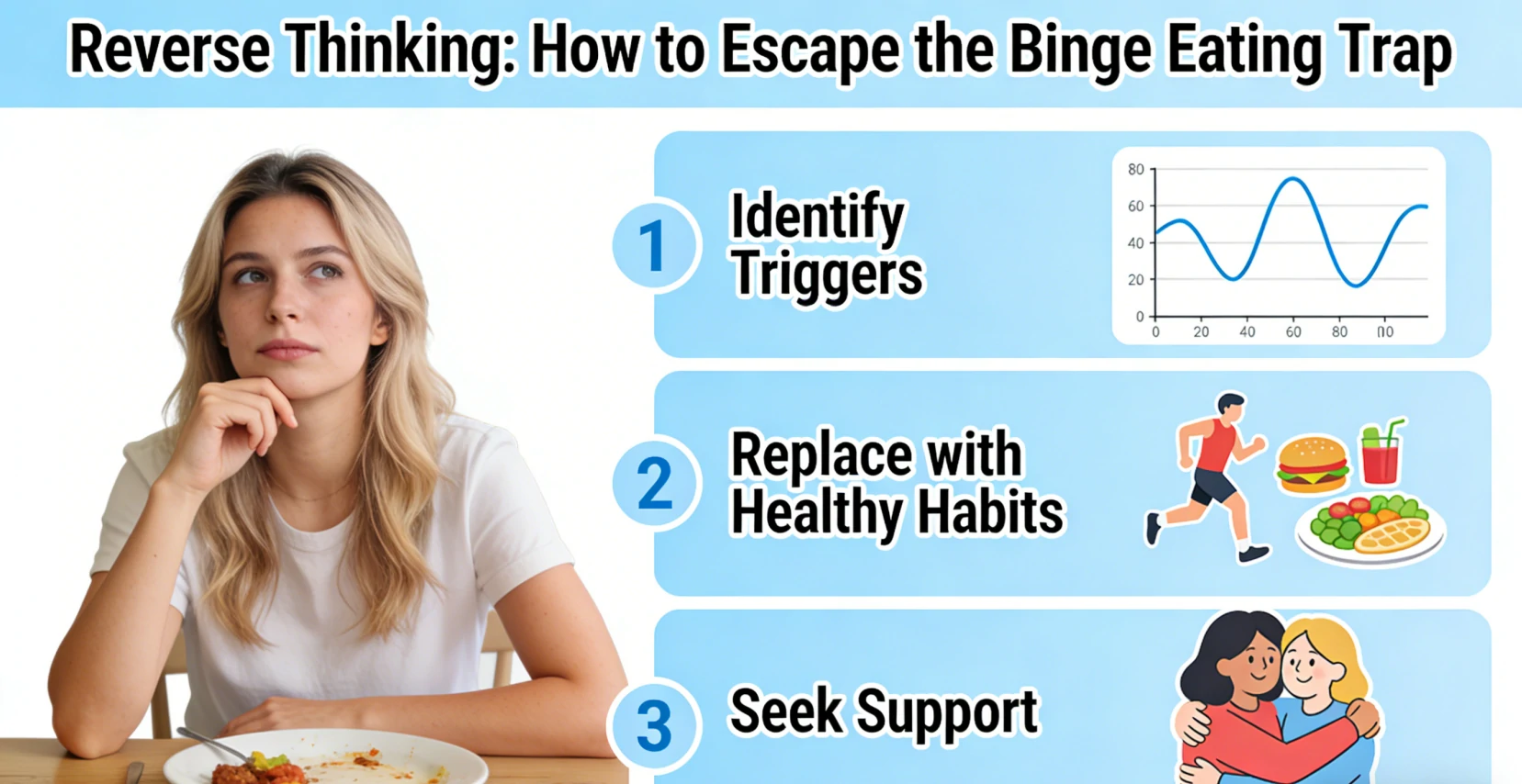


The morning sun filters through the blinds, casting long, striped shadows across the kitchen floor. A mother watches her teenage daughter push scrambled eggs around her plate, the food growing cold, untouched. A concerned friend notices a colleague meticulously logging every calorie in a phone app, anxiety flickering across their face with each entry. In the quiet corners of our lives, a silent struggle often unfolds, masked by the everyday. Eating disorders are not a lifestyle choice or a phase; they are serious, complex mental health conditions with the highest mortality rate of any psychiatric disorder, a stark fact often lost in the noise of diet culture and body image obsession. Yet, their beginnings can be deceptively subtle, woven into the fabric of seemingly normal behavior. The question is not just for clinicians, but for all of us: can we learn to spot the early signs before the patterns harden into crisis?
The landscape of disordered eating is vast and varied, far beyond the simplistic stereotypes of extreme thinness. While anorexia nervosa and bulimia nervosa are the most widely recognized, the spectrum is broad. Binge eating disorder, characterized by recurrent episodes of consuming large quantities of food with a feeling of loss of control, is actually the most common eating disorder in the United States, according to the National Institute of Mental Health. Then there are the "other specified feeding or eating disorders" (OSFED), which encompass a range of distressing symptoms that don't meet the full criteria for the classic diagnoses but are no less debilitating. Avoidant/Restrictive Food Intake Disorder (ARFID), often seen in younger children, involves a lack of interest in eating or avoidance based on sensory characteristics of food, unrelated to body image concerns. This diversity makes early detection a challenge, as the warning signs are not one-size-fits-all.
So, where do we begin to look? The signs often manifest across three interconnected domains: the behavioral, the physical, and the psychological. They are threads in a tightening web.
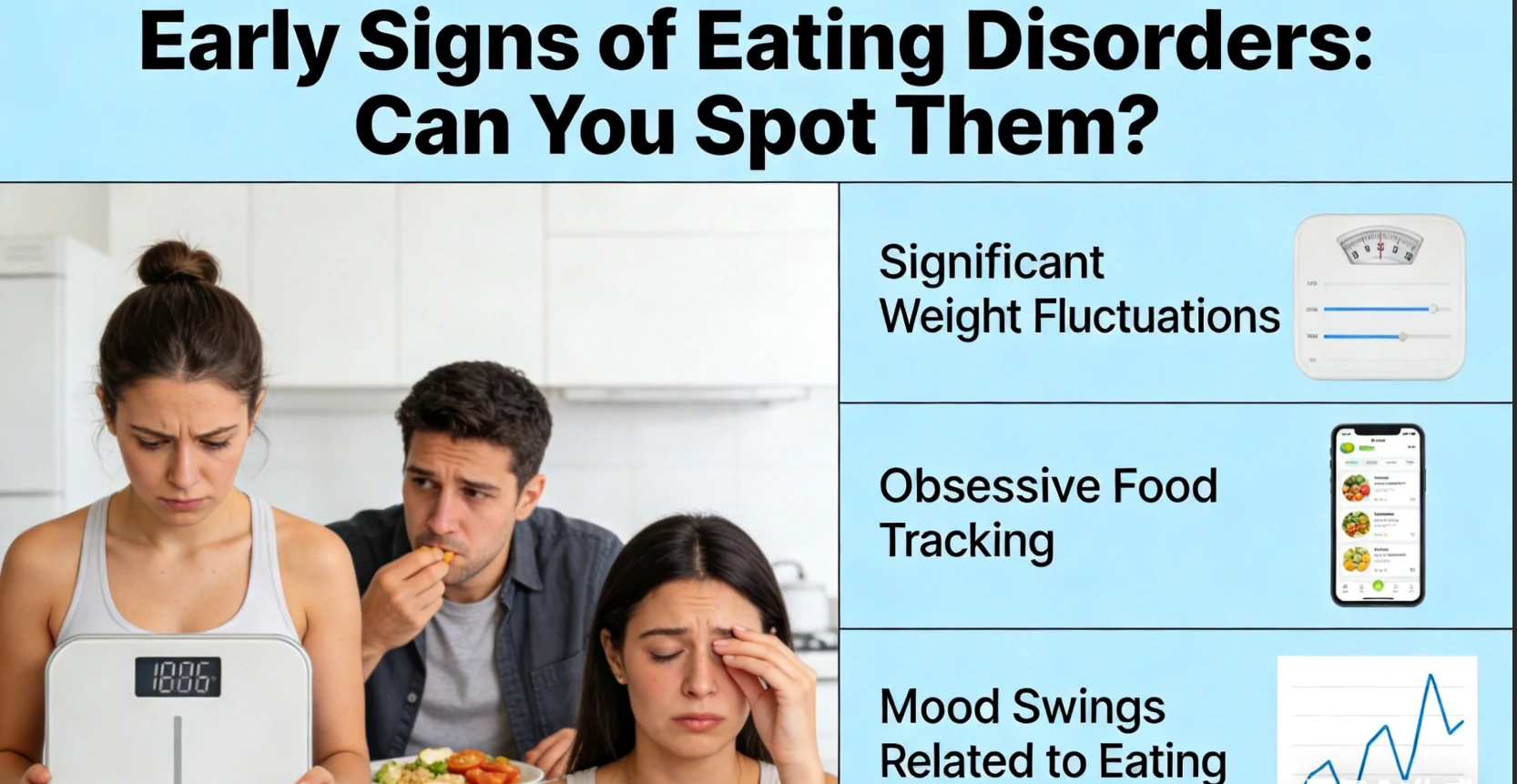
Behavioral Threads: The Rituals of Control The earliest signals are often behavioral shifts, changes in routine that center obsessively around food, weight, and body. It might start innocently enough—a new interest in "clean eating," a decision to go vegetarian. But the line between health-conscious and hyper-controlled can blur quickly. Watch for a preoccupation with dieting, calories, fat grams, and nutritional content that becomes a primary topic of conversation. There may be the emergence of rigid food rituals: eating foods in a certain order, cutting food into tiny pieces, excessive chewing, or an insistence on using specific utensils. Meals may be skipped frequently under the guise of being "not hungry," having "already eaten," or being "too busy."
Social withdrawal is a major red flag. The person may start avoiding situations involving food—family dinners, friends' birthdays, office lunches—because the anxiety of eating in front of others or being unable to control the menu becomes overwhelming. They might disappear to the bathroom immediately after meals, a potential sign of purging behaviors. You might notice a surge in compulsive or excessive exercise, a driven need to "burn off" calories that feels punishing rather than joyful. Exercise is no longer for health or fun, but a mandatory penance for eating. Hoarding or hiding food can also occur, particularly in binge-eating cycles.
Physical Threads: The Body's Whispered Alarms While significant weight loss is a hallmark of anorexia, it's crucial to remember that many people with eating disorders, especially bulimia or binge eating disorder, may be at an average or above-average weight. The physical signs can be more nuanced. Fluctuations in weight, both up and down, can be indicative. Look for signs of frequent dieting, which research from the University of California, Los Angeles, has repeatedly linked to weight cycling and increased long-term health risks.
The body will often show the strain of nutritional deprivation or purging. Complaints of feeling cold all the time, even in warm rooms, can point to a slowed metabolism and loss of insulating body fat. Dizziness, fainting, or fatigue are common as energy reserves dwindle. Hair may become thin, dry, and brittle, or even start to fall out. Skin can become dry, and a fine layer of hair called lanugo may grow on the face and body as the body attempts to keep warm. For those who purge, there may be calluses on the knuckles (from inducing vomiting), swelling in the cheeks or jaw area, and noticeable damage to tooth enamel from stomach acid. Irregular or absent menstrual periods in females are a critical sign of hormonal disruption.
Psychological Threads: The Inner Landscape of Distortion Beneath the behaviors and physical changes lies the engine of the disorder: a profound psychological disturbance. The core feature is often a distorted body image. The person may see themselves as overweight or "wrong" even when evidence suggests otherwise. This distortion isn't vanity; it's a cognitive error, a broken lens through which they view themselves. Their self-esteem becomes inextricably, catastrophically tied to their weight, shape, and ability to control their food intake. A number on the scale can dictate the mood of an entire day.
There is an intense fear of weight gain, a dread that feels existential. Food and eating become sources of immense anxiety, guilt, and shame. For some, eating a "forbidden" food can trigger panic or deep self-loathing. Mood swings, irritability, depression, and anxiety are frequent companions. The person may exhibit signs of perfectionism and black-and-white thinking—foods are "good" or "bad," days are "successes" or "failures" based solely on eating behavior. They may become overly sensitive to comments about food, bodies, or weight, even well-intentioned ones.
The Digital Mirror: Social Media's Amplifying Effect Any discussion of early signs in the 21st century must contend with the omnipresent digital landscape. Social media is not a cause of eating disorders, but it can be a powerful accelerant and a fertile ground for their seeds to take root. Platforms like Instagram and TikTok are awash with "fitspiration," "what I eat in a day" videos from ultra-thin influencers, and pro-anorexia ("pro-ana") or pro-bulimia ("pro-mia") communities that disguise themselves as "wellness" or "recovery" spaces. These communities can normalize extreme behaviors, provide "tips and tricks" for restriction or purging, and reinforce the idea that self-worth is a product of physical appearance.
A teenager scrolling through endless, algorithmically-curated images of "perfect" bodies is engaging in a constant, damaging comparison. A study published in the International Journal of Eating Disorders found a significant correlation between time spent on image-focused social media platforms and increased body dissatisfaction and disordered eating symptoms, particularly among adolescent girls. The early sign here might be an obsessive relationship with these platforms—constantly taking and editing "body-check" photos, following a large number of fitness or diet accounts, or participating in forums with concerning content. The digital world can become both a trigger and a stage for the disorder's performance.
The Critical Window: Why Early Intervention is Everything The progression from early signs to a full-blown, entrenched disorder can be frighteningly swift. The brain, starved of essential nutrients, begins to change. Cognitive rigidity increases, making the person less able to see their situation clearly or consider alternative perspectives. Anxiety and obsessive-compulsive traits related to food can intensify. The behaviors become more automatic, more ingrained—a desperate coping mechanism for underlying emotional pain, trauma, low self-esteem, or a need for control in a chaotic world.
This is why the early window is so vital. The longer the disorder persists, the more physically damaging it becomes, affecting bone density, heart function, and gastrointestinal health, and the harder it is to treat psychologically. Early intervention can disrupt this cascade. It can mean the difference between outpatient therapy and hospitalization, between a shorter recovery journey and a decades-long battle. Perhaps most importantly, catching it early can prevent the disorder from becoming a core part of the person's identity.
How to Respond: The Art of the Compassionate Conversation Spotting a sign is only the first step. The next—approaching the person—is often where well-meaning individuals falter, fearing they will make things worse. The key is compassion, not confrontation.
Choose a private, calm time to talk, free from distractions. Use "I" statements to express concern without accusation: "I've noticed you seem really stressed around mealtime lately, and I'm worried about you," or "I care about you, and I've seen you pulling away from things you used to enjoy. I'm here to listen." Avoid comments on appearance, even positive ones like "You look too thin" or "You look great," as these still tie worth to body size. Focus on the person's feelings, their health, and their happiness.
Listen more than you speak. Be prepared for denial, anger, or shame. Your role is not to diagnose or fix them, but to express unwavering support and gently encourage them to speak with a professional—a doctor, a therapist, or a registered dietitian who specializes in eating disorders. You can offer to help them find resources or go with them to an appointment. The goal is to open a door, not to force them through it.
A Path Forward: Beyond the Signs Recognizing the early signs of an eating disorder is an act of profound attention. It requires us to look beyond surface-level behaviors and listen to the quieter stories of struggle. It asks us to question the toxic narratives about bodies and worth that permeate our culture. For every person meticulously counting calories in public, there may be another secretly binging in private. For every visible rib cage, there is an invisible war with a reflection.
The journey out of an eating disorder is arduous, often nonlinear, and requires specialized, multidisciplinary care. But it begins with a single moment of recognition—a parent, a friend, a teacher, or the individual themselves seeing those early threads and choosing to gently, firmly pull on them before the web is complete. It begins with understanding that these disorders are not about food, but about feelings; not about weight, but about worth. In learning to spot the signs, we don't just become better observers. We become lifelines, holding out a light in the dim, confusing space between a harmful habit and a healing path. The question isn't just "Can you spot them?" It's "Will you be brave enough to see, and kind enough to act?"